
Which Seattle Records Are Open
Seattle sits inside a county-heavy records system. The City Clerk keeps legislation and city administrative files, but King County offices hold recorded land instruments, the property roll, elections material, and the main trial-court files. Washington law often opens an index while limiting the source document. That distinction matters. A name on a deed index can be public even when a protected identifier within an image is not.
| Record group | Official keeper | Web access and range | Copy route |
|---|---|---|---|
| Deeds, liens, marriages, name changes | King County Recorder | Landmark index, 1976 to present; most images from August 1, 1991 | Free watermarked view, paid copy, or Archives microfilm |
| Property and tax | King County Assessor and Treasury | Current eReal Property, Parcel Viewer, and tax tools | Free web reports or agency request |
| Superior Court and probate | King County Superior Court Clerk | KC Script, July 1979 to present; selected direct document view from November 1, 2004 | Portal, clerk counter, or older microfiche |
| Municipal court | Seattle Municipal Court | Current case and calendar tools | Records Unit form or counter |
| Birth, death, marriage, divorce | Public Health, Recorder, Clerk, and Washington DOH | Applications, not a live modern register | Eligibility-based certificate or informational copy |
| Jail and corrections | King County DAJD and Washington DOC | Current custody or published search scope | Free lookup, followed by a records request when needed |
Some material stays closed or partly hidden. Examples include sealed cases, adoption and much juvenile material, protected addresses, driver data, recent vital source records, and selected military discharge records. Courts apply General Rules 31 and 31.1 to case and administrative records. They do not treat a case-file order as an ordinary agency request under the Public Records Act.
Seattle Records in Landmark
Landmark Records Search is the official index for King County deeds, liens, mortgages, plats, surveys, marriage recordings, and other filed instruments. It searches recordings from 1976 forward. Most images from August 1, 1991 forward can be viewed with a watermark. For 1976 through July 1991, the result usually supplies index facts but not the image. The 1853 through 1975 grantor and grantee indexes are at King County Archives on microfilm.
| Landmark control | Input | How to use it |
|---|---|---|
| Name | Indexed party | Try “Last, First,” both party roles, and spelling variants |
| Document | Type and date filters | Start broad because indexing practices changed |
| Parcel ID | First 10 digits | Best for 1997 forward; use with care before about 2002 |
| Recording number | Unique instrument number | Fastest route when another record cites it |
| Legal or book/page | Land description or volume reference | Useful for plats, surveys, and condominium records |
Landmark has no street-address field. Start with the Assessor or Parcel Viewer when the known fact is an address, then carry the parcel number or legal description into Landmark. This local quirk prevents many false dead ends. Results also load a page at a time, so a sort or filter may need to be applied again on each page.
Note: An index identifies a filing; it does not prove that every indexed statement is current or establish a complete chain of title.
Seattle Record Copy Terms
The form of a record changes what it can prove and what it costs. A free index points to the item. A watermarked image lets a reader inspect many newer recordings. An uncertified copy reproduces the filing without an official seal. A certified copy carries the custodian’s authentication and may be required for a formal transaction.
- Custodian
- The office legally responsible for keeping and responding for a record.
- Index
- A finding aid with names, dates, numbers, or descriptions, not always the filed image.
- Certified copy
- A copy authenticated by the issuing office with its seal or certification.
- Exemption
- A legal basis to withhold a record or redact part of it.
Recorder copies cost $1 per page when uncertified. Certification is $3 for the first page and $1 for each added page. Online buyers use an account and card; printable uncertified copies are delivered through the service, while certified copies are mailed, normally within five business days. Orders also go by phone, mail, or at the Seattle counter.
Seattle Court Records Use GR 31
Seattle court research splits across three local systems. KC Script searches King County Superior Court by case number or participant. A result can show the caption, participant roles, case type, filing and status dates, docket events, hearings, and public document descriptions. King County Superior Court is excluded from the statewide Odyssey portal, so a failed Odyssey search does not settle whether a local case exists.
King County District Court offers registered case access, public courthouse terminals, and an emailed Request for Court Records form. Seattle Municipal Court has its own case and calendar tools plus a Records Unit. Older Superior Court work moves offline: pre-July 1979 indexes may require microfiche and a search by case type, party, and approximate year. Clerk terminals may also expose public exhibits or items that are awkward to obtain online.
King County Superior Court’s disclosure page shows the separate route for administrative court records.
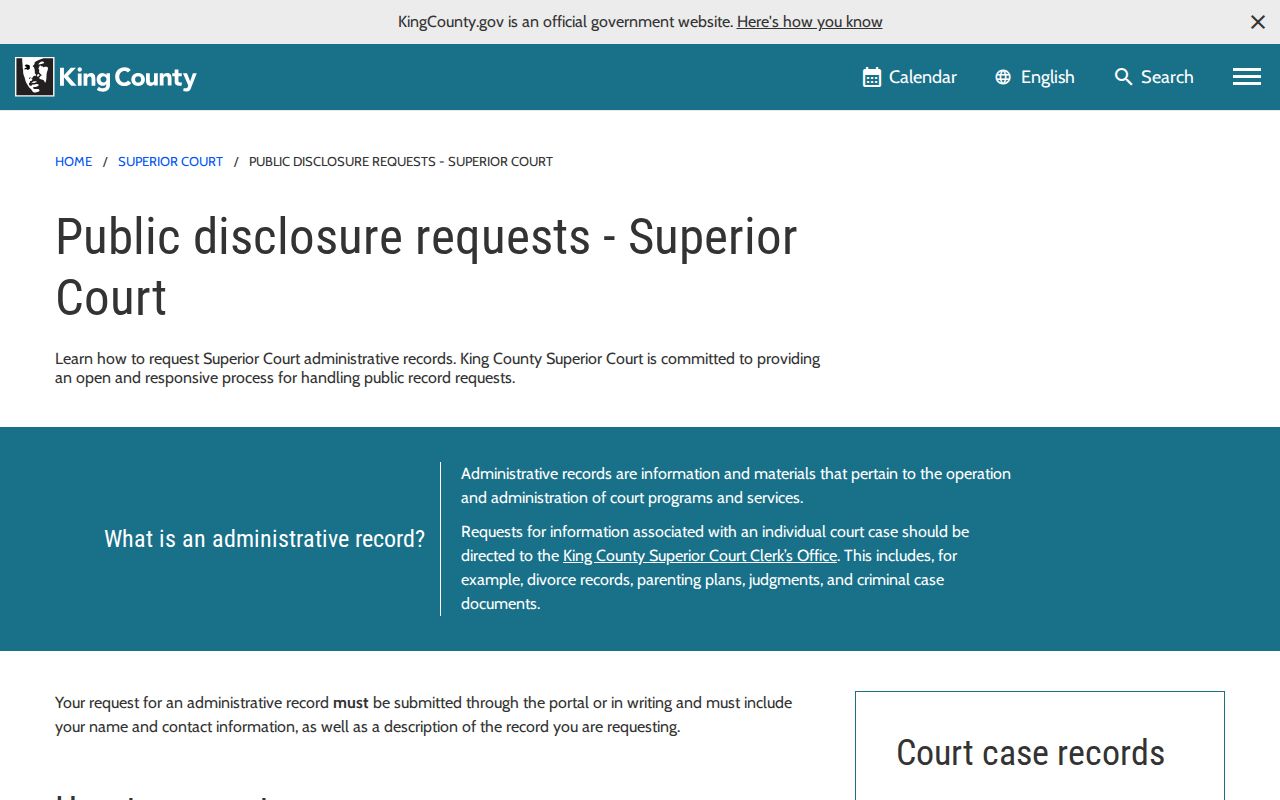
The screen helps separate administrative disclosures from case-file requests handled by the Clerk under court rules.
Seattle Property Records by Parcel
The King County Assessor eReal Property system accepts a parcel number, street address, or owner name. Its report can connect an owner or taxpayer to the situs address, which means the physical property, and to a separate tax-mailing address. It also shows the legal description, assessed values, sale references, and building facts. An assessment entry is not a title certificate, and a mailing address is not proof of residence.
Parcel Viewer supports an address, parcel number, or map click and links into the assessor report. Treasury adds bill, payment, and delinquency status. A current owner can then be checked against the Recorder’s filed deed. Historic property cards from 1937 through 1972 are held at Puget Sound Regional Archives, while older ownership work can continue through Recorder and Archives microfilm.
Seattle Vital Records Have Gates
Modern vital records follow chapter 70.58A RCW, not the ordinary agency disclosure process. Public Health, Seattle and King County issues Washington births registered from 1907 forward and qualifying death records. The King County Recorder supplies local marriage copies. Washington Department of Health handles statewide birth and death products plus marriage and divorce certificates from 1968 forward.
Certified birth and long-form death copies require an eligible relationship, identification, and proof. Anyone may order a noncertified informational birth or short-form death copy. The state base fee is $25, with method fees varying. For family history, historical transfer benchmarks are 100 years for births and fetal deaths, and 25 years for deaths, marriages, and divorces.
The Washington DOH forms collection groups the current applications by product.
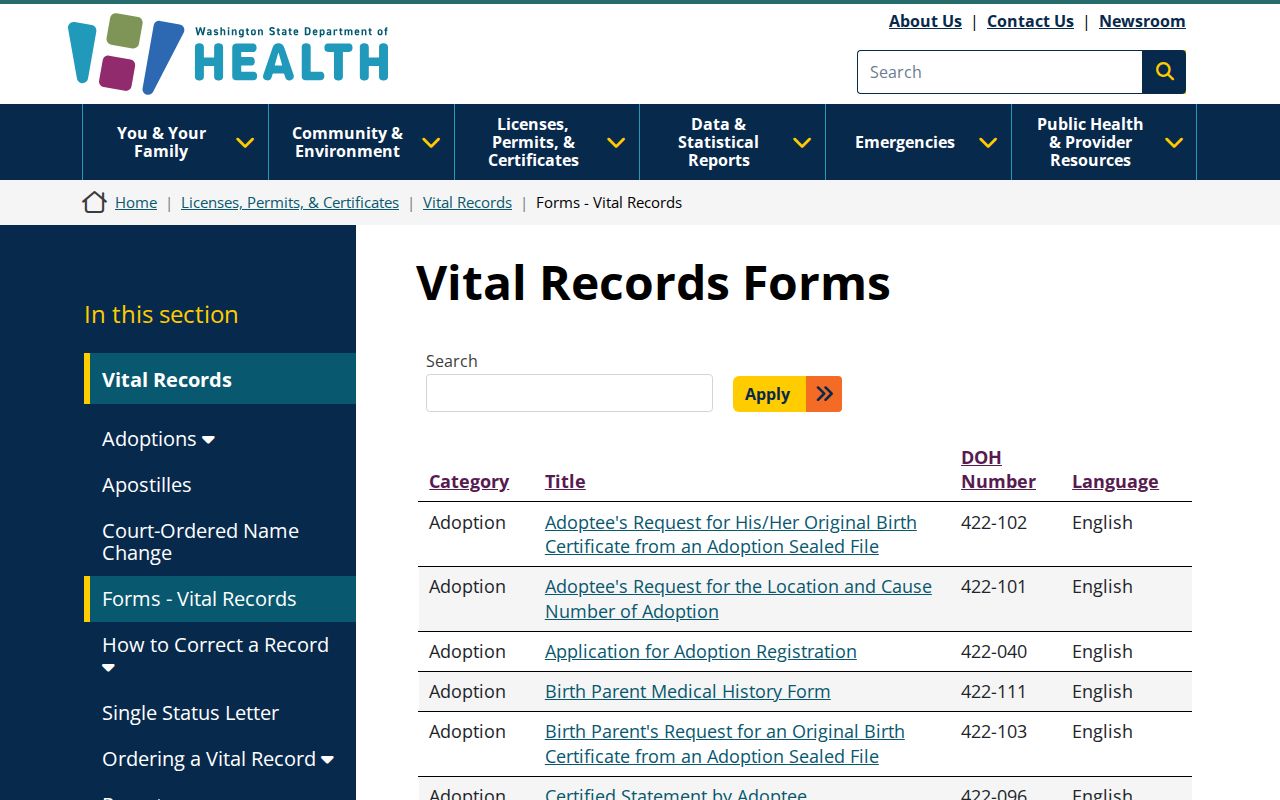
The form list is the right starting point because eligibility and proof requirements differ between certified and informational products.
Seattle Public Records Custodians
Seattle is the King County seat, so several key counters are within the city. Send each inquiry to the office that created or received the record. A broad county request will not replace a Recorder copy order, and a City of Seattle request will not reach a county court file.
King County Recorder
201 S Jackson St, Suite 204
Seattle, WA 98104
206-477-6620
Superior Court Clerk
516 Third Ave, Room E609
Seattle, WA
Clerk counter and terminals
Seattle City Clerk
Legislative Branch records
City request portal
Legislative requests route through the city center.
Archives provides phone and email service on weekdays, limited walk-in lobby hours on Tuesday and Wednesday, and research-room visits by appointment. For old recordings, give a party name, record type, and approximate year or five-year range. A recording number, parcel number, or legal description can save substantial search time.
Route Seattle Records by Agency
The Seattle Public Records Request Center routes requests to the city department that holds them. Select the Legislative Branch for Council, Council staff, and City Clerk material. Police records use the Seattle Police Department channel. A useful request names the record series or type, department, subject, address or person, and a workable date range.
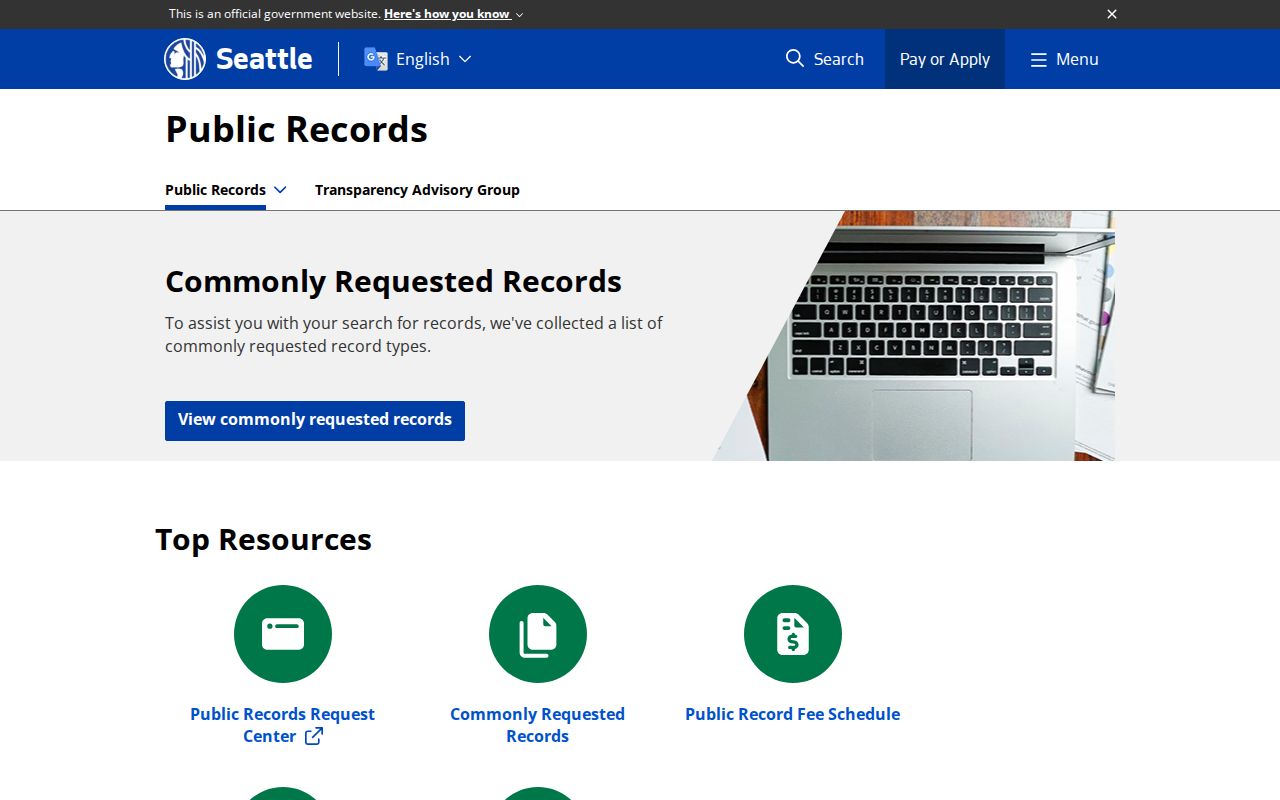
The agency selector matters because a request sent to the wrong unit can be delayed while staff determine where it belongs.
The Seattle Municipal Archives preserves legislative, departmental, permit, map, photo, and building-related evidence from city government. Its catalog may identify the creator and date even when the item is not digitized. Ask for a named person, address, project, department, and date span instead of asking staff to research an open-ended topic.
Seattle Records Fees and Timing
Chapter 42.56 RCW gives an agency five business days to produce the record, acknowledge the request with a reasonable estimate, seek clarification, or deny it with reasons. That is an initial response deadline, not a promise that a large production will arrive in five days. Inspection is generally free.
When an agency uses Washington’s statutory default schedule, common charges are 15 cents per photocopied page, 10 cents per scanned page, 5 cents for each four electronic files or attachments uploaded, and 10 cents per gigabyte sent. Mailing and media costs may be added, and a qualifying flat fee may be up to $2. Deposits or installment payments can apply.
Court schedules differ. Superior Court copies are 50 cents per page; certification is $5 for the first page plus $1 for each added page, and qualifying research may cost $30 per hour. Seattle Municipal Court lists 50 cents per page, certification additions, and $10 per hearing for audio. Confirm the office schedule before paying because the needed product may be an inspection, plain copy, certified copy, or audio record.
Seattle Records Beyond the Web
Online coverage lines are practical boundaries, not proof that an older record is gone. Landmark’s index begins in 1976, while the county’s recorded-document series reaches the territorial era. King County Archives holds the 1853 through 1975 grantor and grantee indexes and the images missing from Landmark’s 1976 through July 1991 span. The County Auditor recorded instruments through 1969; the Recorder took over in 1970 after the county charter change.
Court files follow a similar pattern. KC Script reaches accessible cases filed from July 1979, but older Superior Court indexes and files may require the Clerk’s microfiche or Puget Sound Regional Archives. Seattle Municipal Archives covers city-created material, and Washington Digital Archives provides name-searchable historical collections. A blank web result should lead to the counter, microfilm, archive catalog, or a narrow request.
Note: Search nearby years and name variants because older handwriting, changed indexing standards, and later data entry can alter spelling.
Protected Seattle Record Details
Washington’s Address Confidentiality Program supplies eligible survivors and households with a substitute address and mail forwarding. Agencies and courts generally accept the substitute for new records. It does not erase an accurate deed or case that was already public. A statute, sealing order, redaction process, or other lawful protection is needed to change access.
The official Address Confidentiality Program page explains applying through a trained assistant and the four-year certification term.
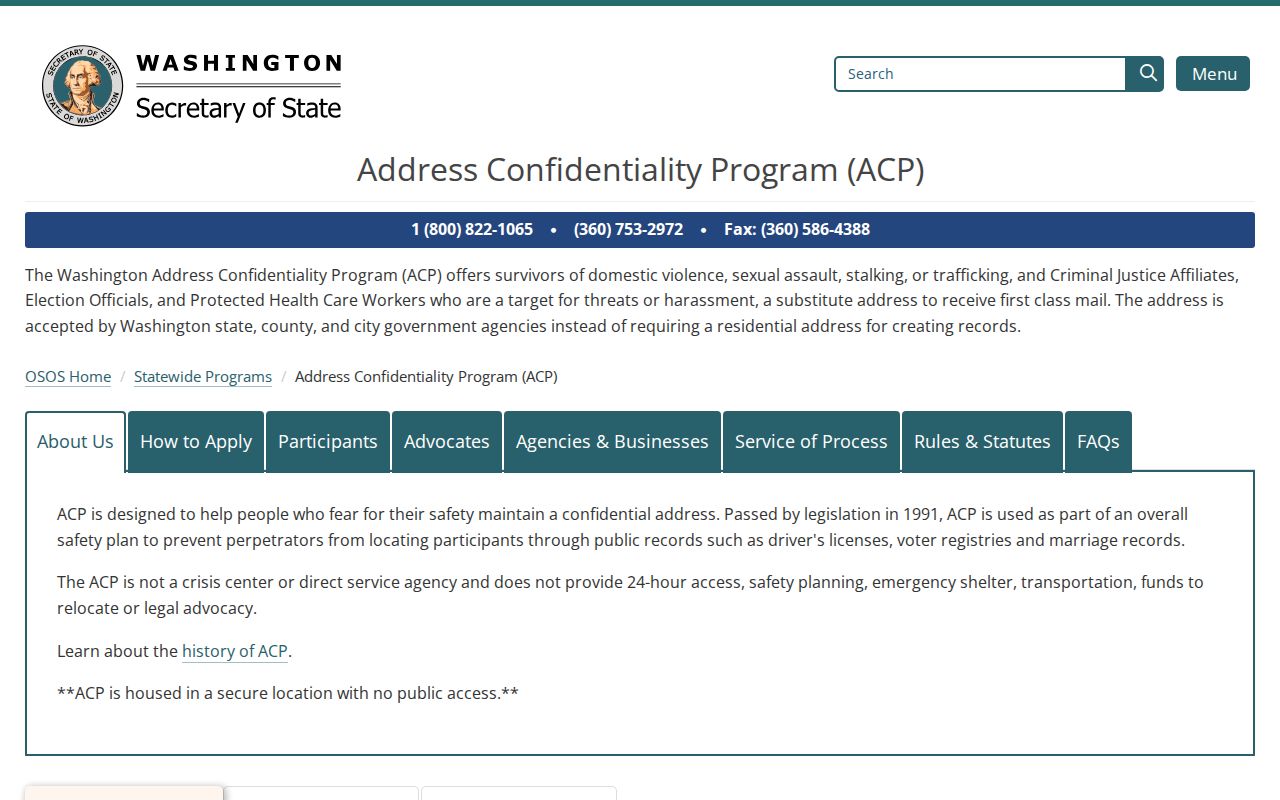
The program’s current instructions help eligible people protect future address use without promising retroactive removal from every older official file.
Respect protected information. Open records support lawful personal research and civic oversight. Never use a name, address, court event, or custody fact to stalk, threaten, or harass anyone.
File a Seattle Records Request
Use the Washington Public Records Act for identifiable existing agency records. An office need not answer questions, create a new record, or conduct research. Court case files, Recorder copies, and vital certificates follow their own routes, so first decide which custodian and access law apply.
- Name the keeper. Choose the City department, King County office, court clerk, or state agency that created or received the item.
- Check the free index. Record a case, parcel, instrument, booking, or other number when one is available.
- Describe an existing record. Give the series or type, subject or name, address, and date range. Ask for inspection or electronic delivery when suitable.
- Track the response. Read estimates and clarification questions, then narrow an overly broad request if that will reach the needed material.
- Review a denial. Look for the cited exemption and redactions. Use the agency’s internal review when offered or the judicial remedy in RCW 42.56.550.
The Washington Attorney General’s Open Government Ombuds can provide education and assistance, though it does not replace court enforcement. For a voter-file question with its separate disclosure and use rules, use the dedicated Seattle voter records resource.