
Build a Seattle People Search
Choose the first record by what is known. A full name works well in recorded documents and court party indexes. An address belongs in the Assessor or Parcel Viewer first. A business name may lead to a state filing, while an old street address may be strongest in a reverse city directory. Seattle records are split among city, King County, Washington, and federal custodians, so a blank result in one system is not the end of the search.
Use a broad surname first, then add a first name, middle initial, date range, or parcel only when needed. Try former names and spelling variants. Seattle records may reflect transliteration, initials, multi-part surnames, and older anglicized forms. Keep each case number, recording number, parcel number, and date found. Those keys are much more precise than a name alone.
- Search the name in King County Landmark and note party roles, document dates, and recording numbers.
- Check KC Script for Superior Court participation, including probate when an heir or estate is involved.
- For an address, use the Assessor roll and Parcel Viewer to find the parcel, owner, and legal description.
- Compare an owner with directories, permits, newspapers, or archival files to distinguish ownership from occupancy.
- Ask the correct custodian for a defined record when the online index ends or the document is not displayed.
Seattle Records Search Offices
Seattle serves as the King County seat, placing the main Recorder, Superior Court Clerk, Archives, and public-health record counters in or near the city. The Recorder indexes deeds, liens, marriage instruments, and other filings. The Superior Court Clerk keeps civil, criminal, family, probate, and guardianship case files. The City Clerk and Municipal Archives hold city laws, boards, correspondence, photos, maps, permits, and other municipal evidence.
King County Recorder
201 S Jackson Street, Suite 204
Seattle, WA 98104
206-477-6620
Superior Court Clerk
516 Third Avenue, Room E609
Seattle, WA 98104
206-296-9300
KC Script and public terminals
Seattle City Clerk
600 Fourth Avenue, Floor 3
Seattle, WA 98104
206-684-8344
Legislative records and archives
The city and county do not keep one master person file. For request deadlines, copying rules, and the correct disclosure channel, use the focused Seattle public records access reference.
Note: Court case files follow Washington court rules, while agency records generally follow the Public Records Act.
Search Seattle Landmark Names
Open King County Landmark when a name may appear on a deed, lien, marriage record, name change, or other recorded instrument. The index begins in 1976. Most document images begin August 1, 1991. Free watermarked images may be viewed when available; uncertified and certified copies have separate order and fee rules.
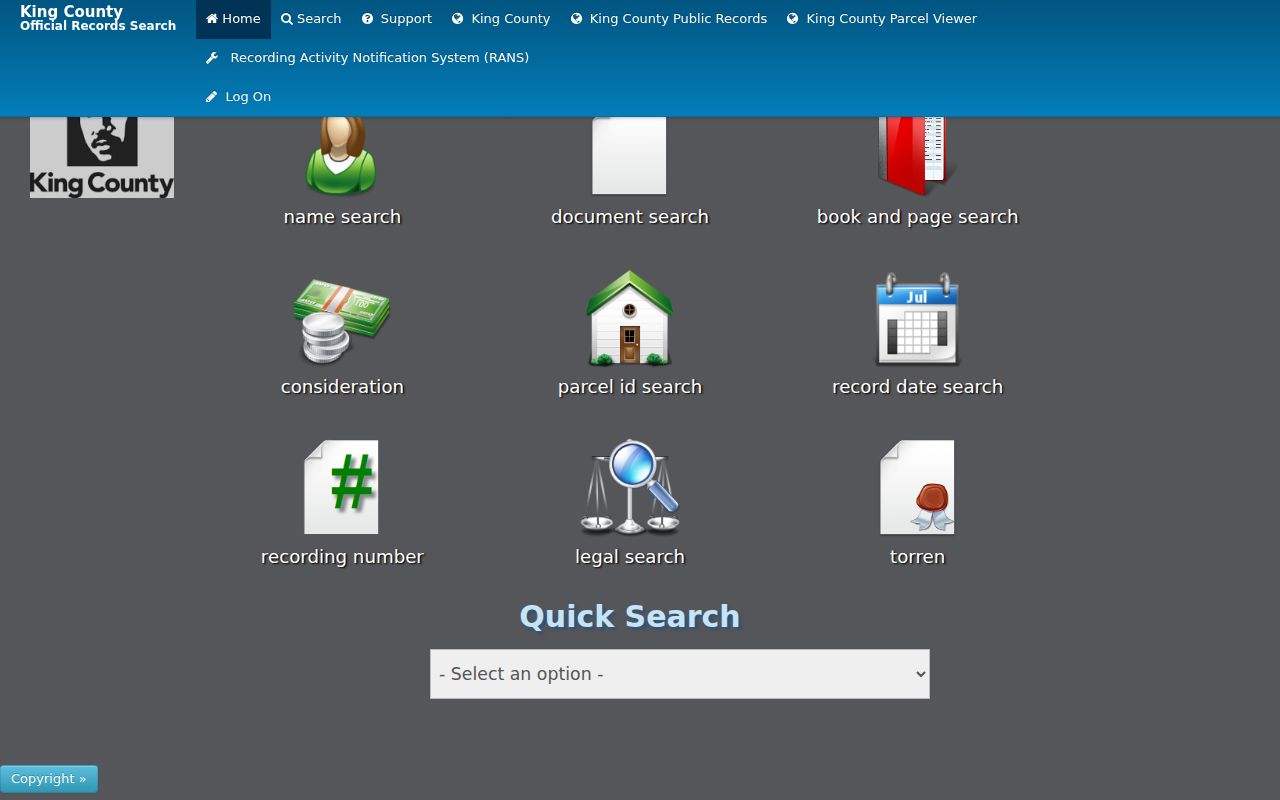
The portal offers several routes, and each solves a different Seattle records problem. A party name is best for a broad people lookup. A recording number retrieves one known instrument. Parcel searching works best for newer records, while legal-description and book-and-page modes help with plats and older references.
| Landmark route | Best input | Useful limit |
|---|---|---|
| Name | Last, First | Searches indexed parties and roles |
| Parcel ID | First 10 digits | Most useful from 1997; inconsistent before about 2002 |
| Recording number | Exact instrument number | Direct match when already known |
| Legal or book/page | Plat, condo, survey, or description terms | Best with terms copied from another record |
- Grantor
- The person or entity giving or transferring an interest.
- Grantee
- The person or entity receiving that interest.
- Index
- A searchable description of a filing, not always the document image.
- Legal description
- The formal land description, which is more exact than a street address.
Bridge Seattle Records Image Gaps
Landmark’s date lines matter. A 1980 entry may appear in the online index without an online image. Take its instrument number to King County Archives, which holds microfilm through July 1991. For recordings from 1853 through 1975, Archives holds the grantor and grantee indexes as well as the recorded-document film. Search by party and an approximate date, then follow cited prior instruments backward.
This is not a lost-record story. Research found no verified major King County courthouse fire or similar destruction event, so gaps should not be explained with folklore. Seattle people research instead crosses media changes: territorial-era film, the 1976 online index line, and the 1991 image line. Recent deeds can point to older instruments, but a citation in one deed is not a complete title chain.
Turn Seattle Addresses Into Names
Start with the King County eReal Property search when an address is known. It accepts parcel, address, or owner input and can return the taxpayer or owner name, situs address, mailing address, legal description, value, building facts, and sale references. A situs address is the physical site. The taxpayer mailing address is where tax mail goes, and it may belong to an agent or another destination rather than the owner’s home.
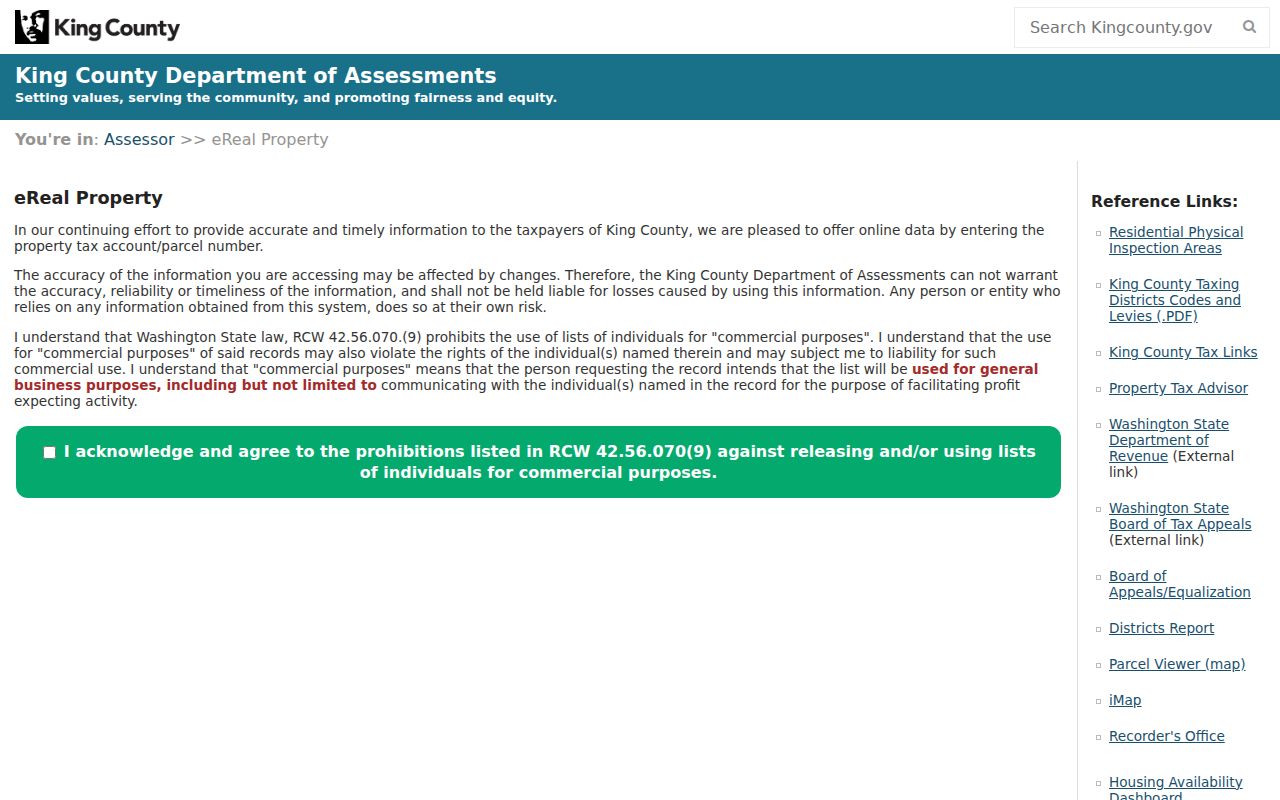
The Assessor result supplies the ten-digit parcel needed for later Seattle records work. Assessment ownership is not a title certificate, however. Confirm a legal ownership trail through recorded deeds and compare an occupant through directories, permits, newspapers, or historic property cards.
Launch King County Parcel Viewer to search by address or parcel, click the map, and open district or development context.
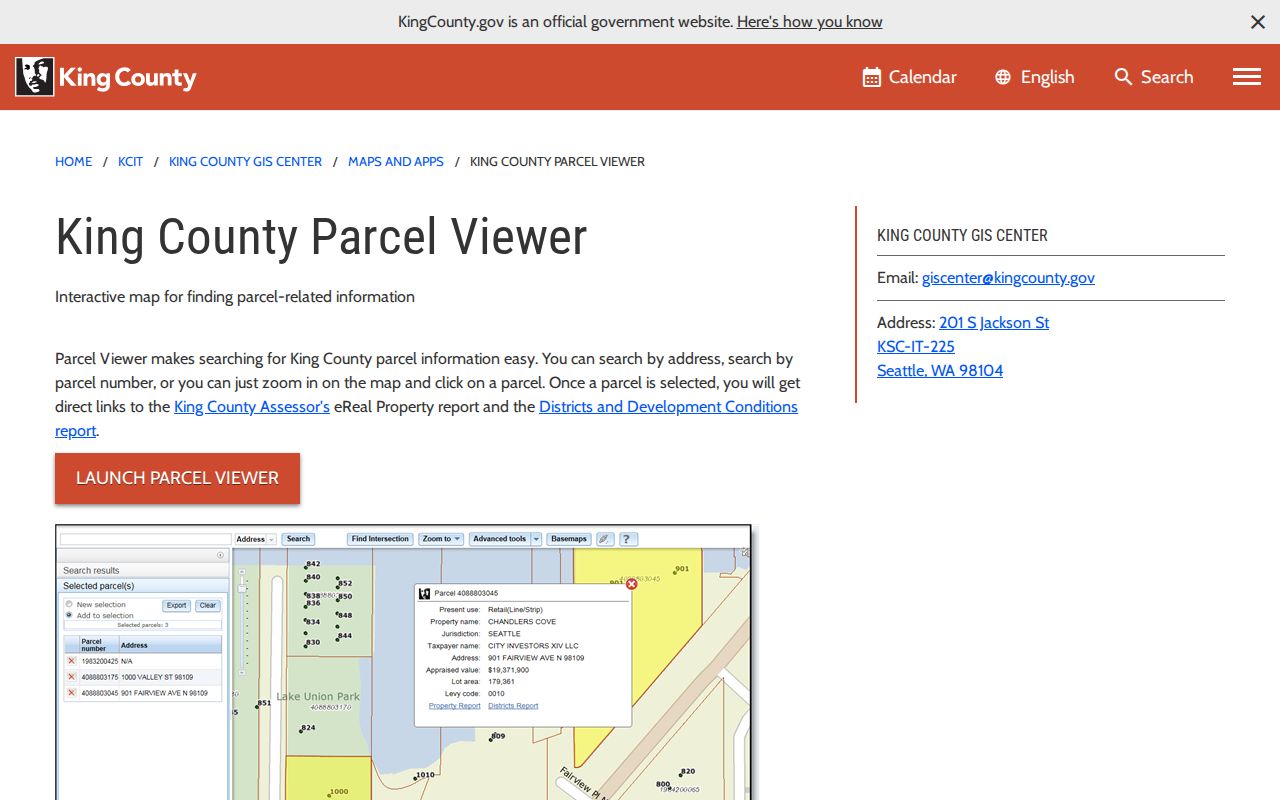
The map connects a Seattle street location to the parcel record; it does not prove boundary lines or show who lives there. The clean trail is address to parcel, parcel to owner, owner to Landmark, then old occupant sources when needed.
Compare Seattle Court Name Searches
Seattle has three main local court routes. Municipal Court covers city misdemeanors, traffic, parking, and civil infractions. King County District Court handles county limited-jurisdiction matters. King County Superior Court holds broader civil, criminal, family, probate, guardianship, and some juvenile-offender cases. A docket is the dated list of events and filings in a case; it is not the same as every filed document.
Search KC Script by case or participant for accessible Superior Court cases filed from July 1979 forward.
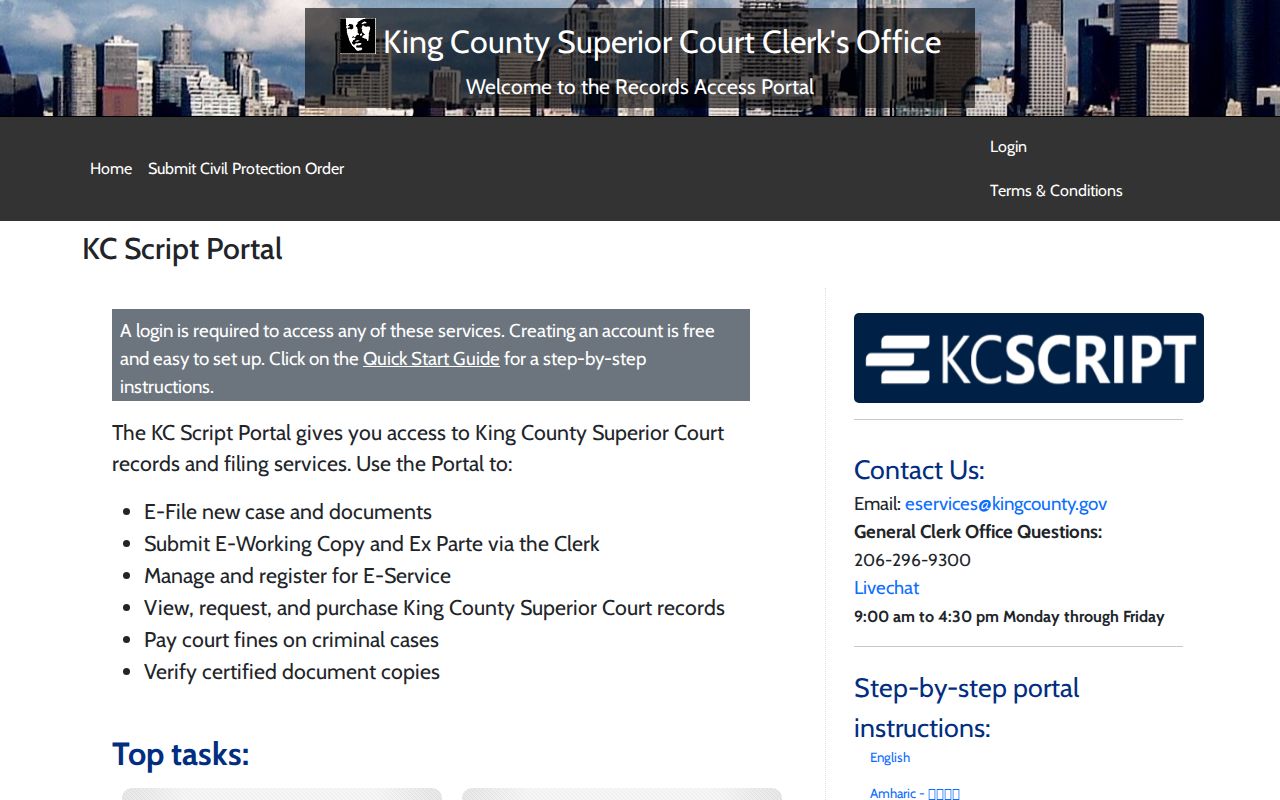
The result may show a case number, caption, participant roles, type, filing and status dates, docket events, and document descriptions. Viewing depends on the document and account rules. Older indexes may require Clerk microfiche, and public terminals can reach material that is awkward to obtain online.
| Seattle-area court | Name route | Fallback |
|---|---|---|
| Seattle Municipal | Public case and calendar tools | Records Unit |
| King County District | Last name, company, or case number | Courthouse terminal or request form |
| King County Superior | KC Script participant search | Clerk counter and pre-1979 microfiche |
| Federal W.D. Washington | PACER party search | Federal Clerk |
Statewide Odyssey excludes King County Superior Court, so its blank result does not clear a name in Seattle. Sealed matters, adoption files, protected identifiers, and much juvenile or dependency material remain restricted.
Trace Seattle Heirs Through Probate
Probate can connect a deceased person with petitioners, personal representatives, heirs, counsel, property, and dated court events. Search KC Script by the decedent’s name and by likely relatives. Order the public petition, will, or court order from the Clerk when the docket alone does not show the relationship. A recorded lack-of-probate affidavit, transfer-on-death deed, or death certificate may supply another link.
Older Seattle estate work moves to repositories. Puget Sound Regional Archives holds Superior Court probate files from 1854 through 1961 and probate indexes through 1977. Washington Digital Archives and King County Archives can add marriages, deaths, naturalizations, deeds, and court material. Probate is especially useful when seeking an heir because it records a legal relationship rather than a mere address match.
Note: A person with the same name is not confirmed until dates, relatives, addresses, or case details agree.
Seattle Vital Records Search Routes
Public Health, Seattle and King County issues Washington births registered from 1907 forward and qualifying death records. The King County Recorder handles local marriage licenses and certificates. Washington Department of Health holds statewide modern birth and death records plus marriage and divorce certificates from 1968 forward. A divorce certificate summarizes the event; the decree and pleadings come from Superior Court.
Washington chapter 70.58A separates certified certificates, informational products, and public historical material. Certified birth records and long-form death records require an eligible relationship, identification, and proof. Informational copies have wider access but are not the same legal product. State base certificate fees are $25, and method charges may add to that amount.
For family history, use the Washington State Archives after the described transfer benchmarks: 100 years for births and fetal deaths, and 25 years for deaths, marriages, and divorces. Pre-1907 Seattle evidence may instead appear in county registers, church sources, newspapers, cemeteries, directories, and census schedules.
Search Seattle Custody Records Carefully
Open King County’s jail lookup with a last name, first name, birth date, booking number, or other available filter.
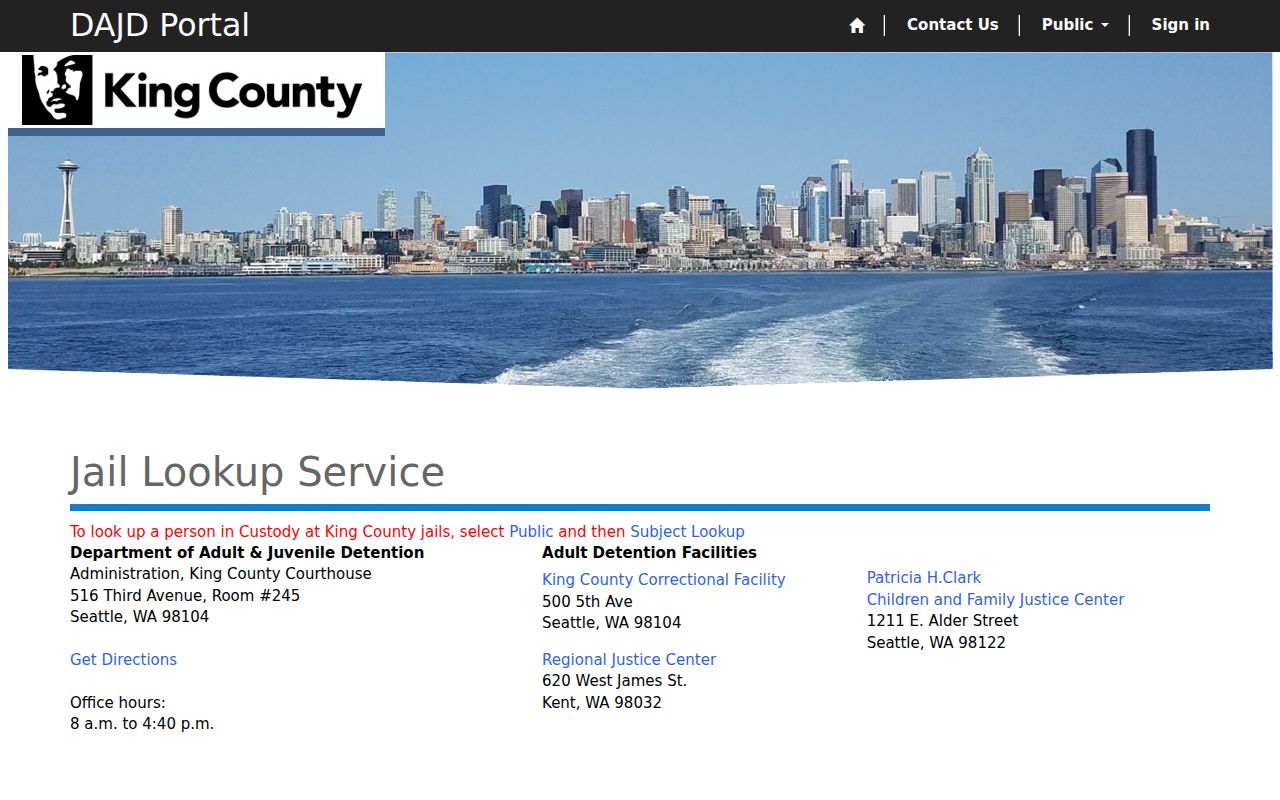
Results can include the universal control number, current or preferred name, facility, arresting agency, booking number, booking date, and action. The tool focuses on current custody and a limited booking history. King County warns that booking data is not a court case, criminal history, filing decision, or final status. Verify any event through the relevant court.
When the public tool is incomplete, contact the Department of Adult and Juvenile Detention or make a defined request for incarceration or jail-operations records. Health and other custody details may be confidential. Historical jail registers survive in scattered runs beginning in 1891 at King County Archives, creating a separate genealogy source rather than a modern status check.
Use Seattle Business Records
A trade name or company can reveal a person when ordinary name searches stall. Seattle’s active business-license data identifies legal and trade names, address, phone, industry, start date, city account number, and state UBI. It held roughly 83,800 active rows when researched and refreshed daily. Washington’s Corporations and Charities Filing System can then show entity status, principal or mailing address, registered agent, governors, and filing history.
Official professional directories add a second check. Washington health credentials show license type, number, status, endorsements, and discipline links. The State Bar directory covers lawyers and other licensed legal professionals. Labor and Industries verifies contractors, including registration, bond, insurance, and infractions. Use these records to verify a seller, contractor, business contact, or possible scam, then compare the name and address across sources.
Find Names in Unclaimed Property
Search Washington Unclaimed Property by an owner’s first and last name or business name, with city details when helpful.
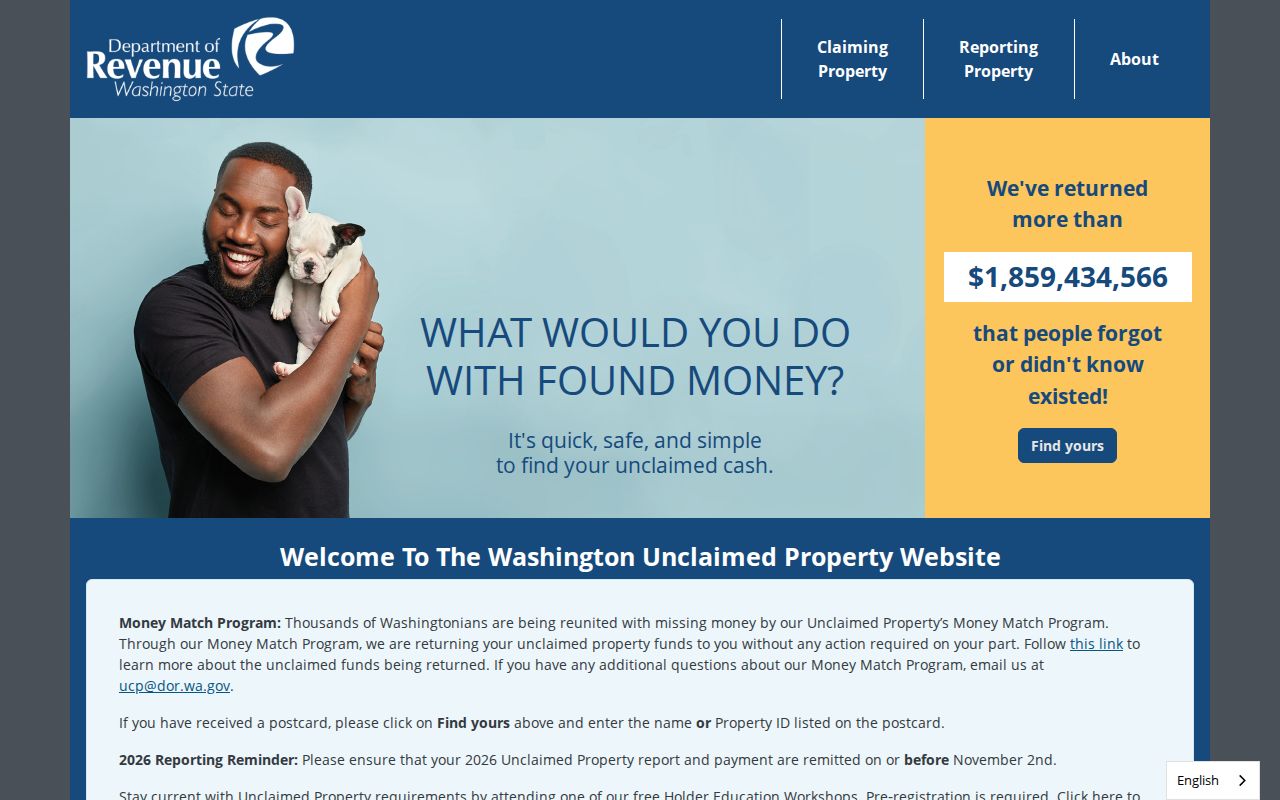
A possible result may identify a holder or property type that links the person to a past account, business, or address. It can be useful for heirs and relatives, but a shared name is not proof. The official claim process requires identity checks and supporting documents. Search name variants and old Seattle addresses, then confirm the match through estate, directory, or recorded-document evidence.
Follow Historic Seattle People Records
Search Washington Digital Archives across local and statewide marriage, death, naturalization, court, and government collections.
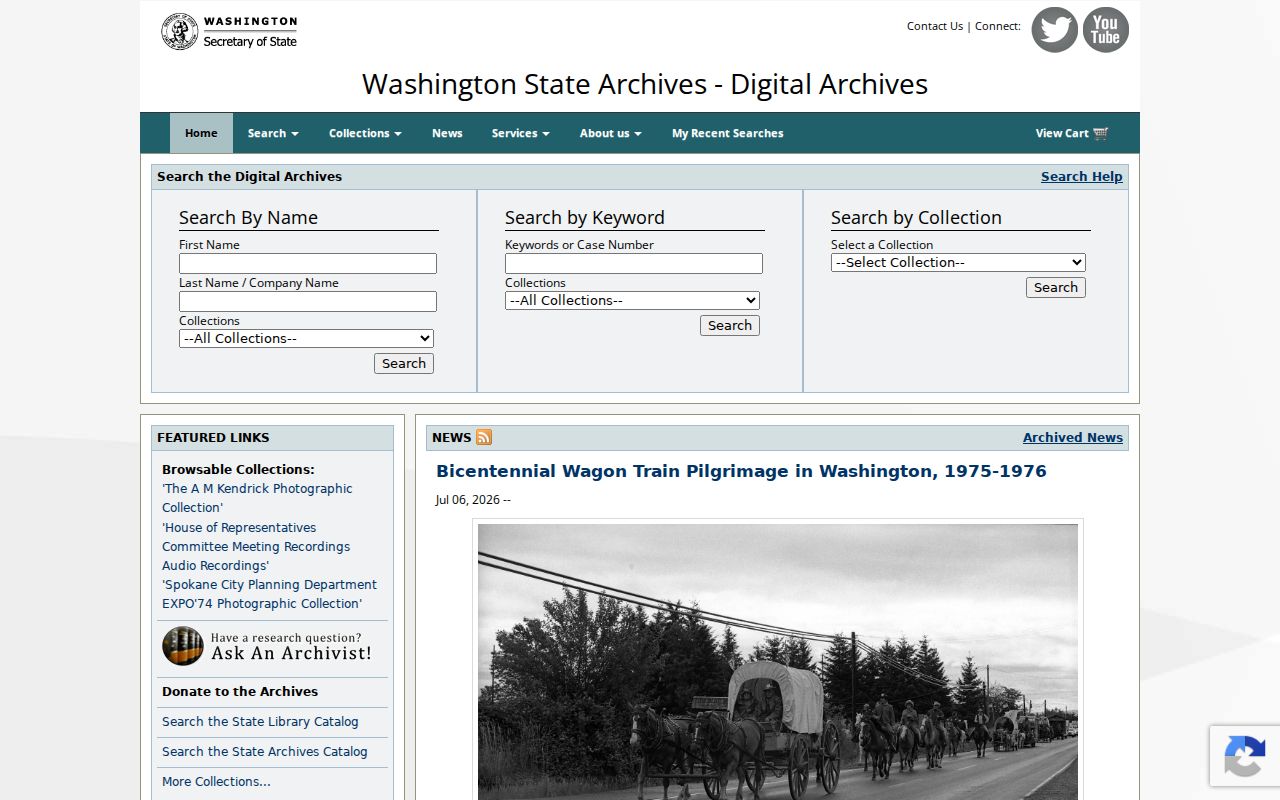
Coverage changes by county and series, so read the collection description before drawing a conclusion from no result. King County Archives adds old deeds, maps, photos, roads, elections, and government files. The Puget Sound Regional Archives holds real-property cards from 1937 to 1972 and early Superior Court civil, criminal, and probate series.
Seattle Public Library’s digitized city directories span selected volumes from 1867 to 1940. The 1928, 1931, and 1934 address-first editions can turn an old address into an occupant or business. Physical Seattle Municipal Archives directories extend from 1890 to 1990, while city employee phone books cover 1972 to 2007. OCR can miss small type, initials, and damaged print, so browse the likely alphabetical or street section after a failed text search.
Search Seattle Before Annexation
Modern Seattle boundaries can hide the right record jurisdiction. Eight independent towns were annexed from 1905 through 1910, nearly doubling the city’s area. Ballard, West Seattle, Columbia, Georgetown, South Park, Ravenna, and other former places may appear under their own names in early directories, censuses, maps, and local files. Search both the former town and Seattle around the annexation date.
Ballard had its own directory volumes before its May 1907 annexation. Municipal Archives also holds an 1890 Ballard census with 1,636 names and ages, plus a 1907 West Seattle census with 7,176 names, neighborhoods, and sometimes ages. Those local counts can bridge the years between federal census schedules. Seattle’s 1961 directional street change is another trap; use official before-and-after maps when an address seems to vanish.
Recover Seattle Lives Between Censuses
Some of Seattle’s richest people records were never made as directories. A register from the removal of the city’s first municipal cemetery records named burials from 1861 through 1884 and their reburial destinations. Seattle City Light waterfront passes from 1918 combine a photograph, name, address, nationality, occupation, and employee name. Both collections can connect facts that are scattered in other records.
The Seattle Public Library Genealogy Collection holds more than 40,000 bound volumes plus periodicals, pamphlets, and microfilm. Librarians and Seattle Genealogical Society volunteers can help with newspapers, obituaries, directory scans, and sources that cannot be searched well by OCR. Cemetery evidence is fragmented, so verify a memorial or obituary against a certificate, newspaper, cemetery office, or archival register.
Respect Seattle Protected Records
Not every public index is an open people directory. VoteWA is an authenticated self-service tool for a voter’s own registration, ballot, and election details, not a casual lookup for someone else. Washington’s public voter extract is governed by strict field and use rules. Protected identifiers, signatures, full birth dates, and Address Confidentiality Program locations are not released as ordinary search data. The dedicated Seattle voter records explanation separates personal lookup from the regulated extract.
Official records are usually the best verification source because their keeper, scope, and update process are known. Commercial databases may combine old public files with contributed contact data, producing stale addresses or merged identities. Use such a result only as a lead, then confirm it with the custodian. Sealed cases, adoption and juvenile material, vital source files, protected addresses, and driver data do not become open merely because a searcher asks for them.
| Search source | Strength | Best practice |
|---|---|---|
| Official index | Known custodian and defined scope | Save the record key and verify the document |
| Archive or library | Older context and offline series | Check dates, collection notes, and name variants |
| Commercial compilation | Broad contact leads | Expect stale or merged data; confirm elsewhere |
Note: Washington agencies may redact exempt details while releasing the rest of an otherwise public record.